I may earn a commission at no extra cost to you. #ad
Embassy Access Control: A Free Guide to Biometric and Physical Security Protocols
Jump to Section
In the world of international diplomacy, the embassy serves as a sovereign island. Safeguarding these assets requires more than just high walls; it demands a sophisticated, multi-layered approach to access control. Modern embassy security relies on the seamless integration of physical barriers, biometric identification, and real-time data analytics to mitigate threats ranging from petty crime to organized state-sponsored incursions.
Layered Perimeter Defense Architectures
Effective access control begins long before an individual reaches the front door. The "Defense in Depth" model utilizes concentric circles of security, each progressively more restrictive.
- Hardened Stand-off Zones: Physical distance is the first line of defense against Vehicle-Borne Improvised Explosive Devices (VBIEDs). Anti-ram bollards and crash-rated planters provide aesthetic but functional protection.
- Perimeter Barriers: High-tensile steel fencing, often integrated with fiber-optic intrusion detection sensors, alerts security personnel to scaling attempts.
- The Gatehouse: This is the primary checkpoint for vehicle and pedestrian screening. Here, Under-Vehicle Inspection Systems (UVIS) and X-ray scanners for personal belongings are standard.
The goal of these layers is not just to prevent entry, but to create reaction time. Every obstacle a malicious actor encounters provides security forces with critical seconds to initiate response protocols.
Advanced Biometric Authentication Modalities
Traditional keycards and PIN codes are susceptible to theft, duplication, or coercion. Embassies are increasingly transitioning to biometric authentication to ensure that "who" is entering matches the "authorized credential."
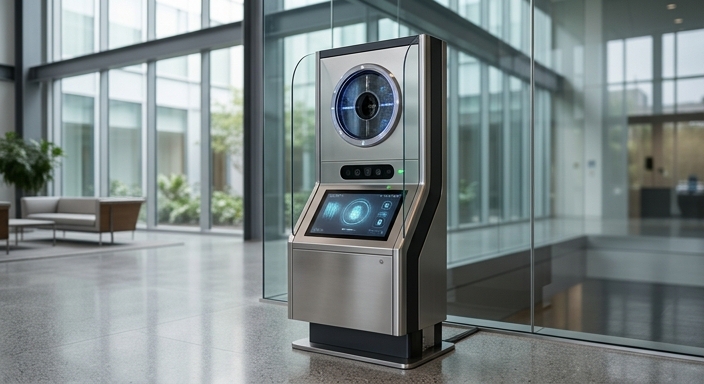
Iris Recognition: Highly accurate and non-intrusive, iris scanning is preferred in high-traffic diplomatic zones because it can be performed through glasses or contact lenses and offers a low False Acceptance Rate (FAR).
Multimodal Biometrics: To enhance security, many embassies utilize a "two-factor" biometric approach. This might combine 3D facial recognition with a fingerprint scan or vascular pattern recognition (scanning the veins in the palm).
Interlocking Portals and Mantrap Systems
A mantrap, or sally port, is a physical security configuration comprising two interlocking doors. The second door will not open until the first door is closed and the occupant has successfully passed all security checks.
In embassy environments, mantraps serve several critical functions:
- Anti-Tailgating: Sensors (often thermal or 3D depth-sensing) detect if more than one person has entered the portal, preventing unauthorized entry alongside an authorized staff member.
- Biological/Chemical Screening: Advanced portals can be equipped with sensors to detect explosive residue or chemical agents before the individual enters the main facility.
- Controlled Containment: If a threat is detected while an individual is inside the mantrap, security can lock both doors, effectively neutralizing the threat until law enforcement arrives.
Identity Management and Credential Governance
Access control is only as effective as the policy behind it. Role-Based Access Control (RBAC) ensures that personnel only have access to the specific areas required for their duties. A diplomat may have access to secure communication rooms, while a maintenance contractor is restricted to utility corridors and public-facing lobbies.
The management of Visitor Access is another critical pillar. Modern systems utilize pre-clearance software where visitors must be vetted against international watchlists before they even arrive. Upon arrival, they are issued temporary credentials that automatically expire after a set duration.
The Convergence of Physical and Digital Security
Today's Access Control Systems (ACS) are not standalone units; they are integrated into the Physical Security Information Management (PSIM) system. This convergence allows for:
- Video Verification: When a biometric scan occurs, the ACS automatically triggers the nearest CCTV camera to record a high-definition clip of the event.
- AI-Powered Threat Detection: Machine learning algorithms monitor traffic patterns. If an authorized user attempts to access a secure area at an unusual hour, the system can automatically flag the event for manual review.
- Audit Trails: Every entry and exit is logged in a tamper-proof database, providing a detailed forensic trail in the event of an internal investigation.
Crisis Response and Lockdown Integration
In an emergency, access control systems must be able to pivot instantly. A "Global Lockdown" command from the Security Operations Center (SOC) should instantly secure all external and internal hardened doors.
Conversely, Rapid Egress protocols must be in place for fire or life-safety emergencies. Modern embassy doors utilize "fail-secure" magnetic locks that remain locked during power outages (powered by UPS systems) but can be overridden by emergency pull stations or centralized fire alarm triggers.
Frequently Asked Questions
What is the most secure biometric for embassies?
Iris recognition is generally considered the gold standard for embassy environments due to its high accuracy, resistance to spoofing, and touchless nature, which is beneficial for both hygiene and speed.
How do mantraps prevent tailgating?
Mantraps use sophisticated weight sensors, infrared beams, or 3D cameras to count the number of occupants. If the system detects two people but only one valid credential was scanned, it will refuse to open the inner door and alert security.
What happens to access control during a power failure?
Embassies use Uninterruptible Power Supplies (UPS) and backup generators to ensure access control remains active. Most high-security doors are 'fail-secure,' meaning they stay locked if power is lost, though they always include mechanical overrides for safety.
Are diplomatic guests subject to biometric scanning?
This depends on the specific embassy's protocol. While high-level dignitaries may have expedited clearance, most visitors undergo at least temporary facial recognition enrollment or fingerprinting as part of the vetting process.